Introduction
Solar energy can be a smart investment — but not every solar contract is designed to benefit the homeowner. Many people sign agreements expecting huge savings, only to discover hidden costs, restrictive terms, and disappointing performance later on.
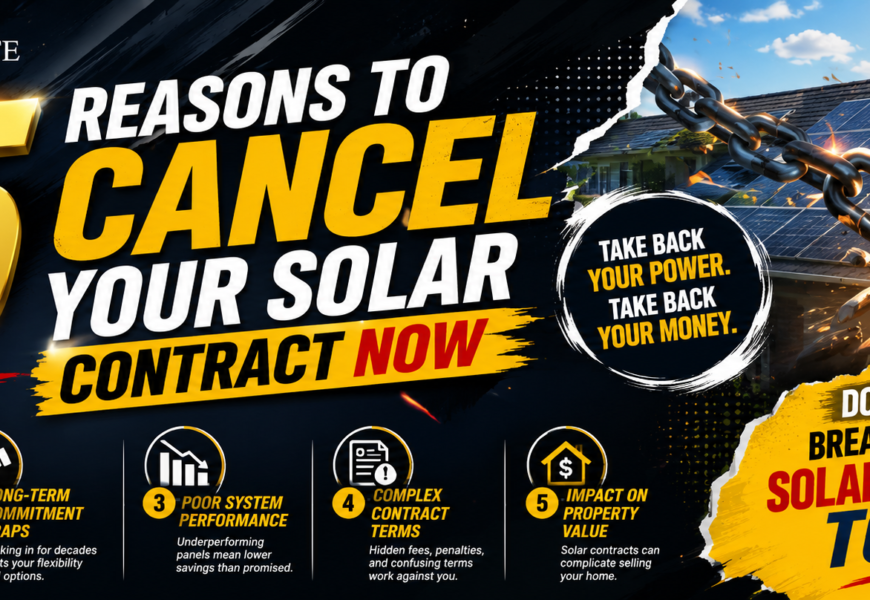
If your solar agreement feels more like a burden than a benefit, it may be time to reconsider your options. Here are five major reasons why homeowners are choosing to cancel their solar contracts before they face bigger financial and legal complications.
1. Higher Than Expected Costs
One of the biggest complaints homeowners have is that their monthly costs end up being far higher than originally promised.
Many solar companies advertise “low payments” or “massive savings,” but the reality can include:
- Hidden installation fees
- Escalating payment structures
- Maintenance charges
- Unexpected financing interest
- Utility bills that don’t decrease as expected
Instead of saving money, homeowners can find themselves paying for both solar financing and regular electricity bills at the same time.
Before continuing with a contract that drains your finances, it’s important to evaluate whether the system is truly delivering the value you were promised.
2. Long-Term Commitment Traps
Most solar contracts lock homeowners into agreements lasting 20 to 30 years.
That’s a massive commitment.
While it may sound manageable initially, long-term agreements can become a serious problem when life circumstances change. You may want to:
- Move to another home
- Refinance your property
- Upgrade your roof
- Switch providers
- Sell your house quickly
Unfortunately, many solar contracts make these transitions difficult. Buyers may not want to inherit expensive solar agreements, and transferring contracts can become a stressful process.
Canceling early can sometimes protect you from decades of financial limitations and contractual obligations.
3. Poor System Performance
Not every solar system performs as advertised.
Some homeowners experience:
- Lower energy production
- Faulty equipment
- Poor installation quality
- System outages
- Reduced efficiency over time
When panels underperform, the promised savings disappear. In some cases, homeowners continue making high monthly payments for systems that fail to meet energy expectations.
A solar system should work for you — not against you. If performance issues continue without proper support or resolution, canceling the contract may be the smarter financial decision.
4. Complex Contract Terms
Solar agreements are often filled with confusing legal language that many homeowners don’t fully understand when signing.
These contracts may include:
- Hidden cancellation penalties
- Automatic payment increases
- Maintenance responsibility clauses
- Complicated ownership structures
- Restrictions on property modifications
Unfortunately, many people only discover these details after they are already locked into the agreement.
Reviewing your contract carefully with professionals can help you determine whether staying in the agreement is truly in your best interest.
5. Impact on Property Value
While solar panels can increase value in some situations, certain contracts can actually make selling your home more difficult.
Potential buyers may hesitate because of:
- Remaining contract balances
- Lease transfer complications
- Additional monthly obligations
- Unclear ownership terms
Real estate transactions become more complicated when solar financing agreements are attached to the property.
If your solar contract is creating obstacles instead of benefits, canceling may help protect your home’s marketability and future value.
Final Thoughts
Solar energy itself is not the problem — the real issue is entering a contract that prioritizes company profits over homeowner protection.
If your agreement includes hidden costs, poor performance, restrictive terms, or financial pressure, you have every reason to explore cancellation options before the situation becomes worse.
Understanding your rights and reviewing your contract carefully can help you make the best decision for your financial future.