
Introduction
Terminating a solar contract can feel overwhelming, especially when legal terms, financing agreements, and long-term obligations are involved. Many homeowners rush into cancellation decisions without fully understanding the process, which can lead to unexpected fees, disputes, or financial complications.
The good news is that with the right approach, you can navigate the termination process smoothly and protect your financial interests along the way. Below are eight important tips to help you handle your solar contract termination professionally and confidently.
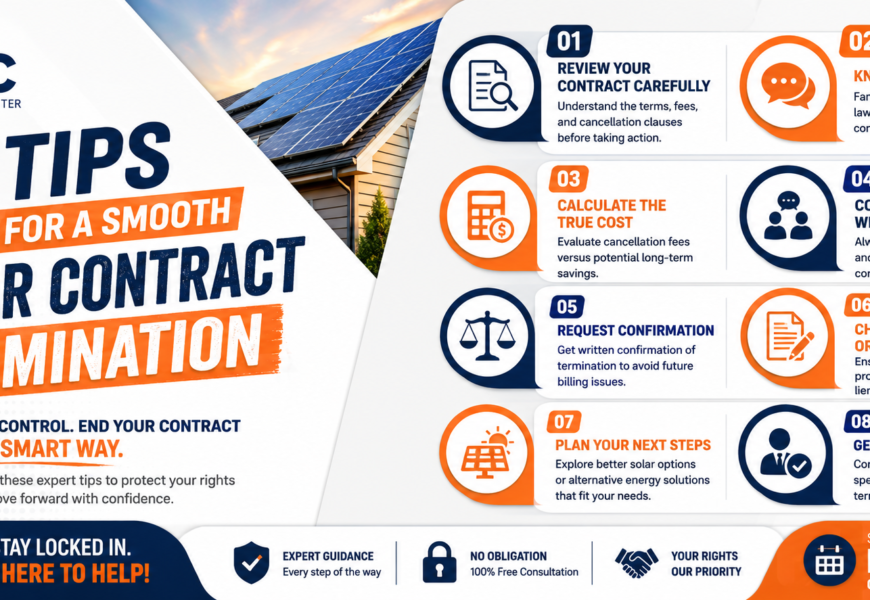
1. Review Your Contract Carefully
Before taking any action, thoroughly review your solar agreement.
Pay close attention to:
- Cancellation clauses
- Early termination fees
- Equipment ownership details
- Financing terms
- Warranty conditions
Understanding the contract language helps you avoid surprises and gives you a clearer picture of your legal and financial responsibilities.
If certain terms seem confusing, consider consulting a legal or solar contract professional before moving forward.
2. Know Your Rights
Consumer protection laws vary by state, and many homeowners are unaware of the rights available to them.
You may have protections related to:
- Cooling-off periods
- Misleading sales practices
- Improper installations
- Contract disclosure requirements
- Unfair financing agreements
Research your local regulations and understand what rights you have before negotiating with the solar provider.
Being informed puts you in a much stronger position during the termination process.
3. Calculate the True Cost
Canceling a solar contract may involve fees, but staying in a bad agreement can sometimes cost even more over time.
Evaluate factors such as:
- Remaining contract balance
- Cancellation penalties
- Loan payoff amounts
- Future utility costs
- Potential long-term savings
Comparing the financial impact of staying versus terminating helps you make a smarter decision based on facts instead of emotions.
4. Communicate in Writing
Always keep your communication professional and documented.
Whenever possible:
- Send emails instead of verbal requests
- Request written confirmations
- Save invoices and notices
- Keep records of conversations and dates
Written documentation protects you if disputes arise later and provides proof of your requests and responses throughout the process.
5. Request Confirmation
Never assume the cancellation is complete until you receive official written confirmation.
Make sure the provider clearly confirms:
- Contract termination status
- Final payment details
- Equipment responsibilities
- Account closure confirmation
This step can help prevent future billing issues or misunderstandings after the agreement ends.
6. Check for Liens or Financing
Some solar systems are tied to financing agreements, property liens, or loans.
Before finalizing termination, confirm that:
- No active liens remain on your property
- Financing obligations are resolved
- Loan balances are clearly documented
- Credit impacts are understood
Ignoring these details can create problems when refinancing or selling your home later.
7. Plan Your Next Steps
After terminating your contract, think carefully about your future energy strategy.
You may want to explore:
- Better solar providers
- More flexible financing options
- Alternative energy solutions
- Energy efficiency upgrades
A smarter long-term plan can help you avoid repeating the same mistakes and ensure your future energy decisions truly benefit your household.
8. Get Expert Help
Solar contracts can be legally and financially complex. Seeking professional guidance can save you time, money, and stress.
Consider speaking with:
- Consumer protection professionals
- Solar contract specialists
- Financial advisors
- Legal consultants
Expert support can help you understand your options, negotiate effectively, and avoid costly mistakes during the termination process.
Final Thoughts
Ending a solar contract does not have to become a stressful or confusing experience. By reviewing your agreement carefully, understanding your rights, documenting communication, and seeking professional guidance when needed, you can move through the process with confidence.
The key is to stay informed, stay organized, and make decisions based on long-term financial protection rather than pressure or promises.